13 November 2026 · Daivagya
Chhath Puja 2026 Step by Step: Nahay Khay to Usha Arghya and Prayers for Family Wellbeing
Discover the complete step-by-step guide to Chhath Puja 2026, from Nahay Khay to Usha Arghya, and understand its deep astrological blessings for family life.
Quick answer
Chhath Puja is a four-day Vedic festival dedicated to Surya Dev and Chhathi Maiya, focusing on purification, austerity, and family wellbeing. Observed across Nahay Khay, Kharna, Sandhya Arghya, and Usha Arghya, this sacred vrata harmonizes the Sun's cosmic vitality, strengthening vitality, family lineage, and domestic peace across the household.
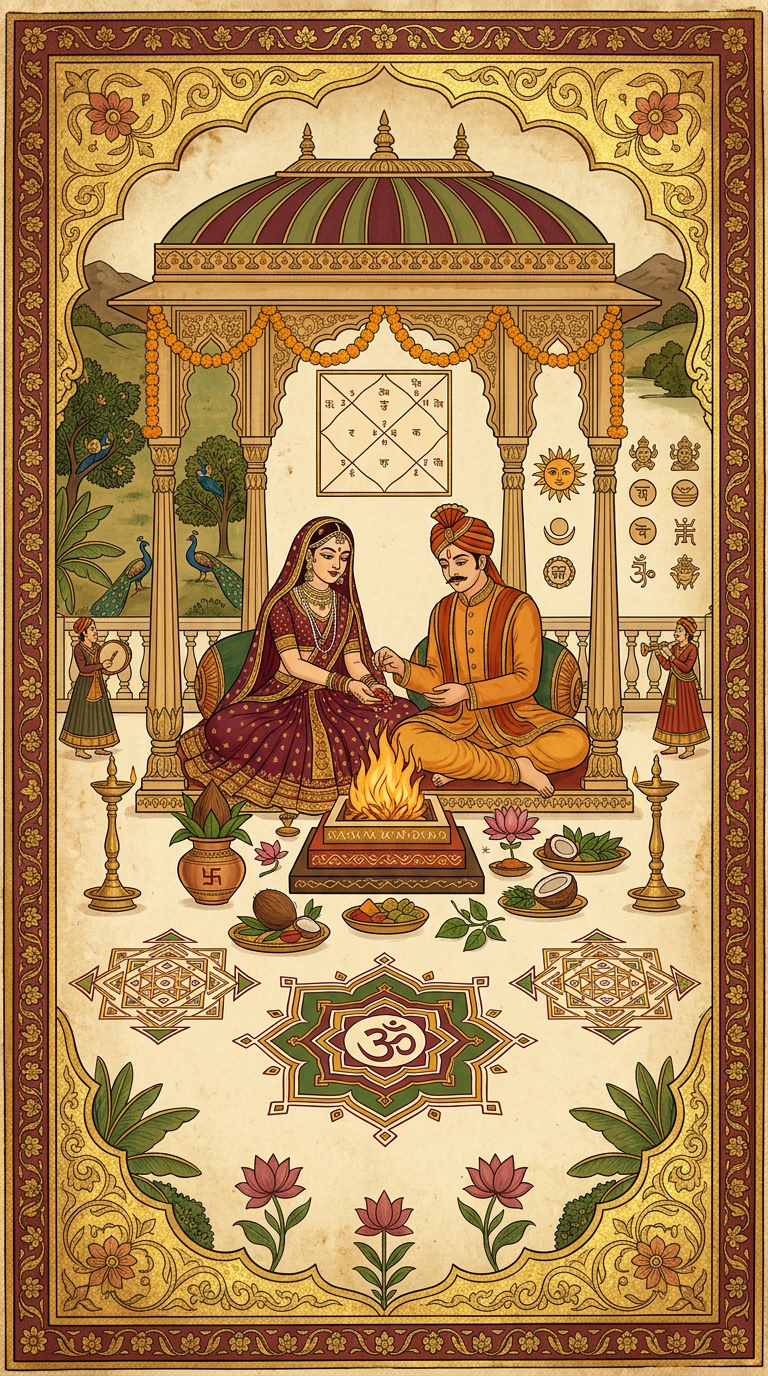
Every autumn, as the festive air settles across North India and the banks of our sacred rivers glow with earthen lamps, a profound stillness descends. In my astrology practice in Noida, I often remind seekers that while many festivals celebrate external victory, Chhath Mahaparv is an inward pilgrimage of pure discipline, gratitude, and cosmic alignment. It is one of the rare Vedic celebrations where rituals are performed directly for the visible divine: Lord Surya, the giver of life, and his energy, Chhathi Maiya (Shashthi Devi).
When families observe the rigorous four-day austerities, the intention is rarely personal vanity. Instead, every offering, every step into the cooling waters, is offered as a silent shield for the household. In this comprehensive guide to Chhath Puja 2026 step by step, I will walk you through each sacred day from Nahay Khay to Usha Arghya, explaining both the traditional rituals and the subtle astrological blessings that uplift family longevity, marital harmony, and children's welfare.
What makes Chhath Puja such a powerful Vedic festival for family wellbeing?
In classical Vedic philosophy, the Sun is known as the Atmakaraka—the significator of the soul, vitality, willpower, and the vitality of the father and family head. Without the Sun's constant radiance, life cannot sustain itself. Chhath Puja, falling on the Shukla Paksha Shashthi of the Kartik month, offers a unique opportunity to attune our physical body and domestic environment to solar energy.
When families gather near water bodies to worship the setting and rising Sun, they participate in an ancient thermodynamic and spiritual purification. In my practice, I have observed that households that honor solar rhythms often experience greater physical vitality and emotional resilience. Chhath is not merely an external ceremony; it is a vow of complete surrender where ego dissolves into pure devotion, bringing deep prayers for family wellbeing directly into manifestation.
The goddess worshipped during these days is Chhathi Maiya, identified as the sixth form of Prakriti (Mata Shashthi) and the solar consort Usha-Pratyusha. She is the divine guardian of children, lineage longevity, and motherhood. When a family observes this fast with pure intention, they invoke divine protection over their progeny and home environment.
What are the key dates and muhurats for Chhath Puja 2026?
Planning for Chhath requires meticulous preparation, as every ritual demands utmost cleanliness and strict adherence to traditional timings. In 2026, the four-day festival takes place during mid-November, aligning with the Kartik Shukla Chaturthi to Saptami tithis.
Below is an overview of the four primary days and their astrological alignment for Chhath Puja 2026:
| Day of Chhath | Sacred Name | Vedic Tithi | Core Ritual Focus | Astrological Significator |
|---|---|---|---|---|
| Day 1 | Nahay Khay | Kartik Shukla Chaturthi | Purification bath, satvik meal of bottle gourd & rice | Chandra (Mind) & Agni (Purity) |
| Day 2 | Kharna (Lohanda) | Kartik Shukla Panchami | Day-long nirjala fast, evening Rasiyaav kheer offering | Guru (Wisdom) & Surya (Vitality) |
| Day 3 | Sandhya Arghya | Kartik Shukla Shashthi | Evening offering to setting Sun at riverbank/pond | Surya (Soul) & Shashthi (Lineage) |
| Day 4 | Usha Arghya & Paran | Kartik Shukla Saptami | Morning offering to rising Sun, breaking 36-hour fast | Usha (New beginnings) & Vitality |
Timing is essential during the final two days, as the Arghya must be presented exactly during the solar twilight windows. You can use our free kundli tool to examine your personal planetary positions and understand how the current solar transit through Scorpio impacts your chart during this sacred period.
How should you prepare on Day 1: Nahay Khay?
The Mahaparv commences with Nahay Khay, which literally translates to "bathe and eat." On this day, the Vrati (the person undertaking the fast) initiates the cycle of purification by cleaning the entire house thoroughly. All conventional spices like onions, garlic, and heavy masalas are removed from the kitchen, and only pristine, untouched bronze or earthen utensils are brought forward.
The ritual steps for Nahay Khay include:
- Sacred Bath: The Vrati takes a holy dip in a river, pond, or at home using clean water infused with Gangajal.
- Cooking the Prasad: A traditional satvik meal is prepared on an earthen stove (chulha) or a dedicated, thoroughly cleansed burner using mango wood or pure fuel.
- The Sacred Meal: The traditional meal consists of Kaddu-Bhat (bottle gourd prepared with rock salt and ghee) along with Chana Dal and boiled rice.
- Sequence of Consumption: The Vrati consumes the meal first after offering prayers to Surya Dev. Only after the Vrati finishes may the rest of the family partake in the blessed food.
Astrologically, the inclusion of bottle gourd (Lauki) and rock salt helps cool the digestive fire and gently detoxify the body, preparing the digestive system for the severe fast that lies ahead.
What is the spiritual significance and routine of Day 2: Kharna?
The second day, known as Kharna or Lohanda, marks the beginning of the intense austerity. From sunrise on this day, the Vrati observes a strict Nirjala fast (without water) throughout the daylight hours. As the Sun sets, special preparations begin for the sacred evening prasad.
On Kharna evening, the kitchen is washed anew. The Vrati prepares Rasiyaav—a sweet kheer made with freshly harvested rice, pure jaggery (gur), and cow's milk—accompanied by hand-rolled wheat rotis smeared with ghee. This preparation is made without speaking, maintaining a state of continuous inner prayer.
Once the food is ready, it is offered to Lord Surya and the ancestors in a secluded, quiet corner of the home. The Vrati sits in absolute silence to consume this prasad. If even a sudden loud noise breaks the silence while eating, the Vrati stops immediately, as tradition dictates that the sanctified eating window is complete. Once finished, water is taken, and the legendary 36-hour unbroken fast begins.
In my consultations, I often note that jaggery represents the planet Sun, while milk represents the Moon. Combining them during Kharna balances the solar and lunar energies in the body, providing inner stability for the arduous days ahead.
How do you offer Sandhya Arghya on Day 3: The evening offering?
Day 3 is the soul of the Mahaparv. The Vrati remains without food and water throughout the day while the entire family unites to prepare the elaborate Daura or bamboo baskets. The primary offering is Thekua—a traditional sweet made from whole wheat flour, ghee, cardamom, and jaggery or sugar, pressed into handcrafted wooden molds (saancha).
During late afternoon, the family processes towards the riverbank, pond, or a specially arranged rooftop water reservoir. Family members carry the heavy bamboo baskets on their heads as an act of humble service and devotion.
The step-by-step offering of Sandhya Arghya includes:
- Setting the Ghat: The riverbank is swept and adorned with sugarcane stalks tied together at the top to form a canopy (Mandap), under which earthen lamps (diyas) are lit.
- Entering the Water: The Vrati steps into the water, standing waist-deep facing west toward the descending Sun.
- The Offering (Arghya): As the Sun touches the western horizon, the bamboo soop (winnowing basket) laden with Thekua, seasonal fruits, coconut, bananas, radish, turmeric shoots, and sprouted gram is lifted.
- Pouring the Oblation: Family members gently pour fresh unboiled milk and pure water across the edge of the soop while the Vrati chants hymns and family prayers to the setting Sun and Pratyusha (the evening rays).
Worshipping the setting Sun is unique to Chhath. Vedic wisdom teaches that life is a complete circle; respecting endings, twilight periods, and moments of transition is just as vital as celebrating new beginnings.
                  ┌───────────────────────────────┐
                  │    The Four Days of Chhath    │
                  └──────────────┬────────────────┘
                                 │
         ┌───────────────────────┼───────────────────────┐
         │                       │                       │
         ▼                       ▼                       ▼
   [Day 1: Nahay Khay]     [Day 2: Kharna]     [Day 3: Sandhya Arghya]
   External Cleansing      Internal Purity     Evening Solar Offering
   & Satvik Diet           & 36-Hr Fast Start  to Western Horizon
                                 │
                                 ▼
                       [Day 4: Usha Arghya]
                       Morning Solar Offering
                       & Paran (Fast Conclusion)
How is Usha Arghya performed on Day 4 to conclude the Mahaparv?
Long before dawn breaks on the fourth day, the family returns to the water's edge. The atmosphere is charged with devotional Chhath geet, aromatic incense, and hundreds of shimmering earthen diyas reflecting on the water's surface. This day is dedicated to Mata Usha, the first radiant beam of dawn that dispels darkness and heralds life.
The Vrati re-enters the cool water well before sunrise, standing with focused patience. When the reddish-gold crest of Surya Dev appears over the eastern horizon, the morning Arghya is presented:
- Morning Soop Preparation: Fresh fruits, coconuts, and new batches of Thekua are arranged in the soop, along with lit earthen lamps.
- Offering to Rising Sun: Facing east, the Vrati raises the soop toward the rising Sun.
- Milk and Ganga Jal Oblations: Family members continuously pour milk and water before the basket, creating a continuous stream through which the morning solar rays refract onto the Vrati's body.
- Pranam and Blessings: The Vrati completes the prayers by circling in the water, touching the holy soil of the ghat, and offering blessings to all family members by applying orange vermilion (Sindoor) from the nose up along the parting of the hair.
After returning home, the Vrati formally concludes the fast (Paran) by sipping ginger infused with water, tasting raw sprouted gram, and eating a bite of sanctified prasad. This marks the triumphant completion of one of the world's most disciplined austerities.
Why is the Sun (Surya Dev) central to marriage and family prosperity in your horoscope?
In Vedic astrology, the Sun holds prime significance when we evaluate the foundational stability of a household. As the natural Karaka of the soul, vitality, fatherhood, and social standing, a dignified Sun in a natal chart grants vitality, clarity of direction, and deep protective instincts toward one's family.
When we examine the fifth house (Santan Bhava) and the ninth house (Dharma & Pitru Bhava), the Sun's strength determines how smoothly lineage continues and how deeply values are passed down through generations. When couples experience friction caused by ego clashes or low vitality, propitiating the Sun through disciplined rituals like Chhath helps soften erratic Martian or Saturnian influences, bringing warmth back to the domestic sphere.
In my practice, I often look at how the Sun interacts with the seventh and fourth houses. If you are experiencing persistent domestic unease or wish to align your family decisions with your planetary cycles, you can book a consultation with me for an in-depth chart assessment. Understanding your solar placement helps you channel your daily efforts toward genuine peace and stability.
What traditional items (samagri) and vows (vrata) are essential for the ritual?
The authenticity of Chhath Puja rests on its unyielding insistence on natural, unadulterated items. Nothing artificial or synthetic is permitted in the preparation of offerings. Every element is drawn directly from the harvest of nature.
The indispensable samagri list includes:
- Bamboo Baskets: Traditional Daura (large basket) and Soop (winnowing trays) woven from natural bamboo.
- Thekua Ingredients: Stone-ground whole wheat flour (Atta), pure cow ghee, and organic jaggery.
- Seasonal Whole Produce: Large bunches of raw bananas, whole coconuts with water (Dabha Nimbu), sugarcane stalks with leaves intact, fresh ginger and turmeric plants with green roots, sweet potatoes (Shakarkandi), water chestnuts (Singhara), and betel leaves (Paan) with betel nuts (Supari).
- Lighting Essentials: Handcrafted clay lamps (Mitti ke diye), cotton wicks, cow ghee, camphor, and earthen elephant vessels (Kosi or Kurbar) used for special night vigils.
- Sindoor & Sacred Threads: Pure orange-colored vermilion and sacred red threads (Kalava).
Beyond material items, the mental vow (Sankalpa) demands complete truthfulness, restraint of anger, charity, and emotional composure throughout the four days.
How does Chhathi Maiya bless children, progeny, and domestic stability?
The worship of Shashthi Devi has ancient roots in the Brahma Vaivarta Purana. According to scriptural lore, King Priyavrata and Queen Malini performed sacred rites to conceive a child, but the newborn was stillborn. When the king was overwhelmed with sorrow, Mata Shashthi appeared from the heavens, revived the child with her divine touch, and declared herself the protector of all infants and children.
During Chhath Puja, when mothers and fathers pray to Chhathi Maiya, they specifically seek:
- Protection of Children's Health: Shielding growing children from illnesses and erratic physical energies.
- Progeny Blessings: Removing astrological impediments in the fifth house (Santan Dosha) to support healthy conception.
- Marital Longevity: The continuous vermilion ritual applied during Chhath symbolizes unbroken devotion, praying for the spouse's long life and moral strength.
- Family Unity: Because the rituals require collective family labor—from washing grains to carrying the Daura—it heals minor domestic discords and reunites generations under a single spiritual aim.
In my years of analyzing family charts, I have seen that rituals honoring Mata Shashthi bring a gentle, grounding energy to homes troubled by anxiety regarding their children's future.
How can you align personal family remedies during the four days of Chhath?
Even if your household does not have a designated Vrati undertaking the complete 36-hour nirjala fast, any family can participate in the spiritual and astrological significance of Chhath Puja by adopting simple, reverent practices at home:
- Daily Surya Arghya at Dawn: Wake up during the Brahma Muhurat (approx. 45 minutes before sunrise), fill a pure copper vessel with clean water, add a pinch of red sandalwood powder and red flowers, and offer it to the rising Sun while chanting the Gayatri Mantra or Om Suryaya Namah.
- Cultivate Satvik Living: Maintain strict vegetarianism and cleanliness throughout your living spaces during these four days, avoiding all pungent ingredients.
- Offer Support to Vratis: Assisting a fasting person by washing their fruits, carrying their offerings, or cleaning the pathway to the ghat generates immense spiritual merit (Punya).
- Charity of Ghee and Grains: Donating whole wheat, jaggery, or pure ghee to those preparing for the festival strengthens Jupiter and the Sun in your chart.
By aligning your home with these timeless Vedic principles, you invite clarity, health, and profound peace across your domestic life during this sacred festival window.
Frequently asked questions
Can someone perform Chhath Puja at home if they cannot visit a riverbank?
Yes. If natural water bodies are inaccessible, you can prepare a clean, dedicated water reservoir on a terrace or courtyard using a large brass or copper vessel or a clean temporary pool. The devotion, cleanliness, and timing of the Arghya are what truly matter.
What should you do if an accidental mistake occurs during the fasting rituals?
Vedic tradition emphasizes sincere intention (Bhaav) over unintentional errors. If a minor oversight happens, stay calm, offer a sincere prayer of forgiveness (Kshama Prarthana) to Lord Surya and Chhathi Maiya, and continue your rituals with a peaceful, dedicated mind.
Why is orange vermilion applied from the nose to the hairline during Chhath?
The long orange Sindoor represents devotion, marital longevity, and solar energy. Extending it upward from the bridge of the nose along the forehead honors the Ajna and Sahasrara chakras, inviting divine protection, health, and prosperity for the spouse and entire household.
Can men observe the 36-hour Chhath fast, or is it only for women?
Chhath Puja is not restricted by gender. Both men and women can undertake the Vrata with equal devotion. Many men observe the complete four-day austerity for the wellbeing of their family, children, and parents with deep spiritual commitment.
What is the ideal way to break the fast during Paran on the fourth day?
After completing the Usha Arghya at sunrise, the Vrati returns home and breaks the fast by consuming sanctified water with a piece of raw ginger and jaggery, followed by raw soaked chickpeas and a small portion of Thekua prasad before having a regular satvik meal.
The beauty of Chhath Mahaparv lies in its purity: it requires no elaborate priestly mediation, only an open heart, disciplined senses, and genuine gratitude toward the natural forces that sustain us. May the radiant blessings of Surya Dev and Chhathi Maiya illuminate your home with health, marital harmony, and enduring peace. If you ever wish to explore how your planetary positions influence your family life and personal journey, you are always welcome to connect with me for a thoughtful and confidential consultation.
Continue reading
Govardhan Puja and Bhai Dooj 2026: Family Blessings in the Days After Diwali
Discover how Govardhan Puja and Bhai Dooj 2026 channel post-Diwali planetary energies to strengthen sibling ties, marital harmony, and home prosperity.
Diwali Week 2026 Day by Day: Dhanteras to Bhai Dooj Puja Guide for Couples
Discover how couples can observe Diwali week 2026 together. Day-by-day rituals, auspicious muhurats, and Vedic astrology remedies for lasting marital harmony.
Afflicted Moon in the Kundli: Mood Swings, Insecurity and Married Life
An afflicted Moon can create emotional turbulence in marriage. Learn how lunar afflictions cause insecurity and mood swings, and how to bring stability.
Makar Sankranti 2027 (14 January): Why Wedding Bookings Surge After It
Discover why wedding dates and venue bookings surge right after Makar Sankranti on 14 January 2027, marking the end of Kharmas and the start of Uttarayan.
Want your specific situation analysed?
Book a private Marriage & Relationship Consultation with Dr. Rahul Singh — your charts read in detail, with a clear, confidential opinion you can act on.
Limited offer · was ₹15,000 · One-time payment · 60-minute personal consultation