11 November 2026 · Daivagya
Makar Sankranti 2027 (14 January): Why Wedding Bookings Surge After It
Discover why wedding dates and venue bookings surge right after Makar Sankranti on 14 January 2027, marking the end of Kharmas and the start of Uttarayan.
Quick answer
Makar Sankranti on 14 January 2027 marks the Sun's transit into Capricorn, concluding the month-long inauspicious Kharmas period and opening the auspicious Uttarayan half of the year. This celestial shift activates vital cosmic energies for vivah sanskar, leading to an immediate surge in wedding muhurats, venue reservations, and family preparations across the country.
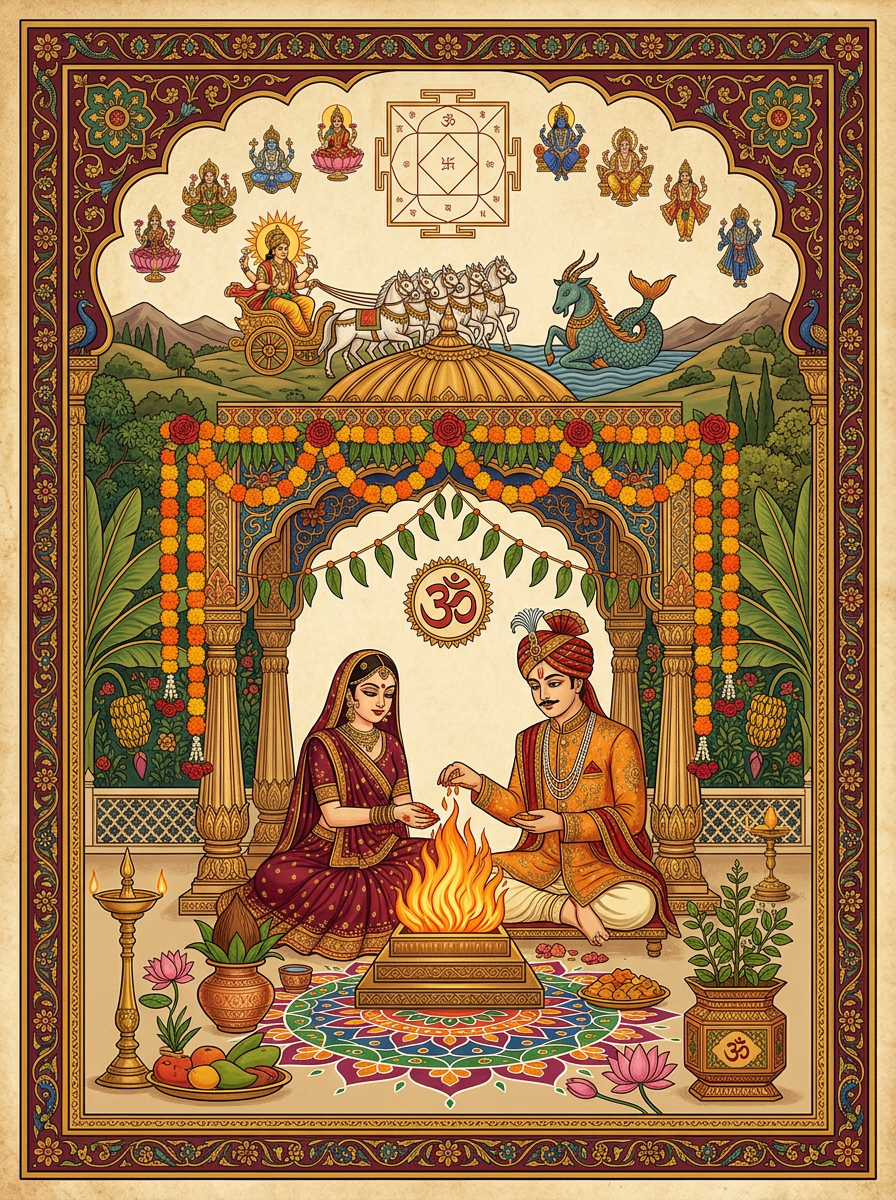
Every year in my Noida practice, as the winter air turns crisp in December, a familiar pattern unfolds. Families visit with birth charts in hand, hoping to finalize wedding dates, only to pause their plans until mid-January. They wait for a specific turning point in the solar calendar: Makar Sankranti.
On 14 January 2027, the Sun completes its transit through Sagittarius and enters the cardinal earth sign of Capricorn (Makar Rashi). This astronomical event is not merely a seasonal harvest celebration; it is a major astrological threshold. The moment the Sun crosses into Capricorn, the auspicious phase of Uttarayan begins, bringing an end to the pause on sacred rituals known as Kharmas.
Understanding why Makar Sankranti 2027 wedding bookings experience such a sudden, intense surge requires looking beneath modern event planning and examining the classical principles of Vedic astrology. When celestial energies shift from inward reflection to outward vitality, families naturally feel the cosmic green light to celebrate sacred unions.
What actually happens astrologically on Makar Sankranti 2027?
In Vedic astrology, the movement of the Sun (Surya) dictates the macro-rhythm of vitality, dharma, and societal activities. On 14 January 2027, Surya leaves Dhanu Rashi (Sagittarius), a sign ruled by Jupiter, and steps into Makar Rashi (Capricorn), ruled by Saturn.
This ingress is called Makar Sankranti. It initiates the six-month period known as Uttarayan, the northern course of the Sun on the celestial sphere. In classical texts such as the Surya Siddhanta and the Brihat Samhita, Uttarayan is described as the daytime of the Devas, representing clarity, growth, longevity, and spiritual upliftment.
For marriage, which is a life-affirming sanskar aimed at creating a stable foundation, the Sun's transit into this period provides the structural strength needed for long-term endurance. The cosmic atmosphere changes from one of spiritual withdrawal to active manifestation.
Why is the month before Makar Sankranti considered quiet for weddings?
To understand why bookings surge after 14 January, you must first look at the month that precedes it. From mid-December to mid-January, the Sun travels through Sagittarius, creating a period traditionally known in North and Central India as Dhanurmas or Kharmas.
In the astrological framework, when the Sun occupies Jupiter’s fire sign (Dhanu), the solar energy becomes completely absorbed in spiritual pursuits, higher learning, and meditation. Jupiter’s expansive wisdom softens the commanding, worldly authority of the Sun. Classical muhurat texts state that during this time:
- The vital life-force (Prana) is turned inward toward contemplation rather than domestic enterprise.
- The Sun loses its sharp worldly beneficence for family and lineage-building ceremonies.
- Planetary support for material prosperity and societal milestones remains dormant.
During Kharmas, auspicious ceremonies like weddings (Vivah), housewarmings (Griha Pravesh), and naming ceremonies (Namkaran) are traditionally paused. When this month-long planetary quietness concludes on 14 January 2027, the pent-up demand for wedding dates is released almost overnight.
Why do wedding venue and priest bookings spike immediately after 14 January?
The post-Sankranti rush is a mix of astrological readiness and practical family logistics. Once the Kharmas ending removes the scriptural prohibition, the calendar opens up several verified windows for marriage ceremonies.
Families who spent late autumn finalizing proposals, matching charts, and discussing alliances suddenly find themselves with clear astrological clearance. In cities like Noida, Delhi, and across northern India, banquet halls, caterers, decorators, and experienced Vedic priests find their calendars filling up within days of Sankranti.
In my practice, I often advise clients that waiting until January to start looking for venues is risky. The moment the Sun enters Capricorn, every family whose charts have been approved during December competes for the same prime dates. The surge is an inevitable consequence of aligning collective social life with cosmic movements.
How does the Sun's shift into Uttarayan affect Vivah Muhurat selection?
In Vedic electional astrology (Muhurat Shastra), timing a wedding is never just about choosing a convenient weekend. It is about aligning the couple's personal vitality with universal natural laws. Uttarayan marriage timing carries special weight because it infuses the Vivah Sanskar with solar strength.
The Sun represents the soul (Atma), personal authority, health, and vitality. When the Sun travels northward through Uttarayan, its rays are believed to foster expansion, endurance, and nourishment. A marriage solemnized during Uttarayan is traditionally believed to receive the full blessings of the solar devatas, promoting:
- Physical health and longevity for both partners.
- Stability and social standing for the newly formed household.
- A natural alignment with seasonal warmth and productive life energy.
While marriages do take place during Dakshinayan (the southern transit) when specific months allow, the beginning of Uttarayan on Makar Sankranti is universally acknowledged as the most straightforward and unobstructed window of the year.
Which planetary alignments make early 2027 particularly active for marriages?
The wedding surge following Makar Sankranti 2027 is shaped by a confluence of planetary positions beyond just the Sun's movement. For a marriage muhurat to be truly supportive, astrologers look at Tribala Shuddhi—the purity and strength of the Sun, Jupiter, and the Moon.
In early 2027, several supportive conditions align:
- Jupiter’s Supportive Stance: Jupiter (Brihaspati), the significator of wisdom, husbandly energy in female charts, and domestic blessings, occupies an auspicious position that supports family harmony and ethical foundations.
- Venus Visibility (Tara Shuddhi): Venus (Shukra), the primary significator of love, marital bliss, and shared affection, must be clearly visible in the sky. When Venus is neither combust (Asta) nor debilitated, it provides genuine emotional and aesthetic harmony to new couples.
- Lunar Fortitude: The post-Sankranti winter months offer numerous dates where the Moon transits through fixed and gentle nakshatras, such as Rohini, Uttara Phalguni, Uttara Ashadha, and Hasta, which are ideal for building a steady home.
When you look at your birth chart alongside these universal transits using our free kundli tool, you can clearly see whether your personal dasha periods harmonize with these broader celestial movements.
What key factors determine an auspicious wedding date after Makar Sankranti?
Not every day after 14 January is automatically suitable for a wedding. Choosing an auspicious vivah muhurat requires evaluating the five limbs of the Vedic calendar (Panchanga) to eliminate harmful planetary flaws (doshas).
| Panchanga Element | Ideal Selection for Marriage | Influences on the Marriage |
|---|---|---|
| Tithi (Lunar Day) | Dvitiya, Tritiya, Panchami, Saptami, Ekadashi, Trayodashi | Emotional stability, absence of conflict, and overall prosperity. |
| Vara (Solar Day) | Thursday, Friday, Wednesday, Monday | Jupiterian wisdom, Venusian harmony, intellectual clarity, and nurturing care. |
| Nakshatra (Constellation) | Rohini, Mrigashira, Magha, Uttara Phalguni, Hasta, Swati, Anuradha, Uttara Ashadha, Uttara Bhadrapada, Revati | Marital endurance, fidelity, emotional depth, and physical wellness. |
| Yoga (Luni-Solar Union) | Preeti, Ayushman, Saubhagya, Shobhana, Sukarma, Dhriti, Harshana, Shiva, Siddha | Long-lasting affection, mutual respect, and smooth problem-solving. |
| Karana (Half-Tithi) | Bava, Balava, Kaulava, Taitila, Garija, Vanija | Steady domestic progress and the successful fulfillment of responsibilities. |
In addition to these five limbs, we ensure the Lagna (the rising sign at the exact hour of the ceremony) has no malefic planets occupying the 7th house or the 8th house. This guarantees that the foundation of the relationship remains unburdened by sudden upheavals.
Should you rely on a general calendar date or check your individual Kundlis?
A common mistake I see among couples is selecting a wedding date purely based on a standard wall calendar or general almanac (Panchang). A date may be universally auspicious, but if it clashes with your personal natal planets, its benefits can be severely compromised.
True muhurat calculation requires cross-referencing the universal timing with both individual charts:
- Chandra Bala (Lunar Strength): The transit Moon on the wedding day must not fall in the 4th, 8th, or 12th house from your natal Moon sign.
- Surya Bala (Solar Strength): The transit Sun should be in a favorable house from the groom's natal Moon to ensure professional and personal vitality.
- Guru Bala (Jupiterian Strength): Jupiter’s transit should favorably aspect or occupy supportive houses from the bride's natal Moon, ensuring domestic peace and mutual respect.
Universal Auspicious Window (Panchang)
                 +
Personal Chart Alignment (Chandra/Surya/Guru Bala)
                 =
A Resilient, Protective Vivah Muhurat
Before you commit to a venue deposit or sign contracts with vendors, verifying your personal planetary alignment through a private chart review saves tremendous stress later on.
What mistakes do families often make during the post-Sankranti wedding rush?
Because the period after 14 January 2027 becomes competitive for event bookings, families often make hurried decisions. Over the years, I have seen several recurring missteps that you can easily avoid with mindful planning:
- Prioritizing Venue Availability Over Lagna Shuddhi: Families sometimes pick an auspicious day but hold the ceremony during an inauspicious rising lagna simply because the venue had a specific slot open. The Lagna is the very soul of the wedding moment; it should never be treated as an afterthought.
- Overlooking Planet Combustion (Asta): A date might look fine on the surface, but if Jupiter or Venus is combust (too close to the Sun), the essential blessings of wisdom and romance are muted.
- Rushing the Matching Process: In the rush to secure a post-Sankranti date, families sometimes rush through birth chart analysis. A thorough compatibility assessment takes time and careful reading of the D9 Navamsha chart, not just a quick numerical score.
- Ignoring the Rahu Kaal and Gulika Kaal: Even on a wonderful day, beginning the Kanyadaan or Saptapadi during Rahu Kaal introduces avoidable planetary friction.
How can you smoothly plan your 2027 wedding timeline around Makar Sankranti?
If you are planning to marry in early 2027, the best approach is to be proactive during the months leading up to Makar Sankranti. Rather than waiting for the January rush, use the preceding quiet period strategically:
- 6 to 8 Months Prior: Complete your kundli matching and chart compatibility assessments. Identify your broad planetary favorable windows and current running dashas.
- 3 to 4 Months Prior (Autumn 2026): Have your astrologer shortlist 2 to 3 primary and secondary vivah muhurats for the post-Sankranti period (mid-January through spring 2027).
- During Kharmas (Dec 2026 – Early Jan 2027): While you hold off on signing ritual contracts or conducting engagement pujas, use this reflective time for quiet administrative planning, guest lists, and wardrobe preparation.
- Post-14 January 2027: Move forward with clear dates, confident that your ceremony aligns with both cosmic law and practical convenience.
Taking a measured, structured approach allows you to respect ancient astrological traditions without experiencing the chaos of last-minute bookings. If you would like personalized guidance to identify the exact, flawless muhurat for your upcoming union, you are welcome to book a consultation with me at our Noida office or online.
Frequently asked questions
Can a wedding take place on the exact day of Makar Sankranti 2027?
While Makar Sankranti marks the entry into Uttarayan, the exact day is primarily dedicated to solar transit rituals (Sankranti Snana and charity). Most classical traditions recommend waiting until the Sun is fully settled into Capricorn, starting weddings from the days immediately following 14 January, once a specific auspicious tithi, nakshatra, and lagna align.
What is Kharmas and why does it stop wedding ceremonies?
Kharmas occurs when the Sun transits through Sagittarius or Pisces, both ruled by Jupiter. In Vedic astrology, this transit shifts the Sun's cosmic influence toward introspection and spiritual learning rather than material and domestic expansion. As a result, major rites of passage like weddings are paused until the Sun enters Capricorn or Aries.
Is Uttarayan mandatory for fixing all Hindu weddings?
While Uttarayan is the most preferred and straightforward half of the year for auspicious milestones, it is not strictly mandatory for every marriage. Certain months during Dakshinayan can host successful weddings provided specific criteria—such as planetary visibility, clean nakshatras, and strong personal birth charts—are thoroughly satisfied.
How does Venus combustion (Shukra Tara Asta) affect dates after Makar Sankranti?
If Venus is combust (Asta) by sitting too close to the Sun, its ability to grant romantic harmony and marital happiness is weakened. Even during Uttarayan, if Venus or Jupiter is combust, wedding ceremonies are paused until the planet rises (Udaya) and regains its full planetary radiance.
What should we do if our preferred venue is booked on the primary muhurat date?
Always ask your astrologer to calculate at least two or three alternate, highly supportive muhurat windows. As long as the secondary date maintains personal Tribala Shuddhi (strength of Sun, Moon, and Jupiter) and a clean rising Lagna, the marriage will remain fully protected and blessed.
Continue reading
Every Auspicious Wedding Date from November 2026 to March 2027: The Complete Muhurat List
Discover the complete list of auspicious wedding dates from November 2026 to March 2027, with detailed Panchang analysis, Nakshatra timings, and chart tips.
Vivah Panchami 2026 (23 November): Why Some Families Avoid It and What Jyotish Actually Says
Understand the cultural lore, planetary facts, and classical Jyotish rules surrounding Vivah Panchami 2026 before fixing your wedding date.
Dev Uthani Ekadashi and Tulsi Vivah 2026 (20-21 November): When the Wedding Season Truly Begins
Discover the spiritual and astrological significance of Dev Uthani Ekadashi and Tulsi Vivah 2026, marking the official opening of the Hindu wedding season.
Kartik Purnima 2026 (24 November): What This Full Moon Means for Married Couples
Discover how Kartik Purnima 2026 influences marital harmony, emotional balance, and shared prosperity, along with traditional rituals and astrological insights.
New here? Start with the full guide to Vivah Muhurat: Choosing the Right Wedding Date, or try the free kundli tool.
Want your specific situation analysed?
Book a private Marriage & Relationship Consultation with Dr. Rahul Singh — your charts read in detail, with a clear, confidential opinion you can act on.
Limited offer · was ₹15,000 · One-time payment · 60-minute personal consultation