16 November 2026 · Daivagya
Afflicted Moon in the Kundli: Mood Swings, Insecurity and Married Life
An afflicted Moon can create emotional turbulence in marriage. Learn how lunar afflictions cause insecurity and mood swings, and how to bring stability.
Quick answer
An afflicted Moon in Vedic astrology disrupts mental calm, leading to emotional hypersensitivity, chronic insecurity, and fluctuating moods in married life. When the Moon suffers from debility, malefic conjunctions, or poor house placement, minor marital disagreements feel overwhelming. Targeted remedies, emotional self-awareness, and supportive chart matching restore lasting domestic harmony.
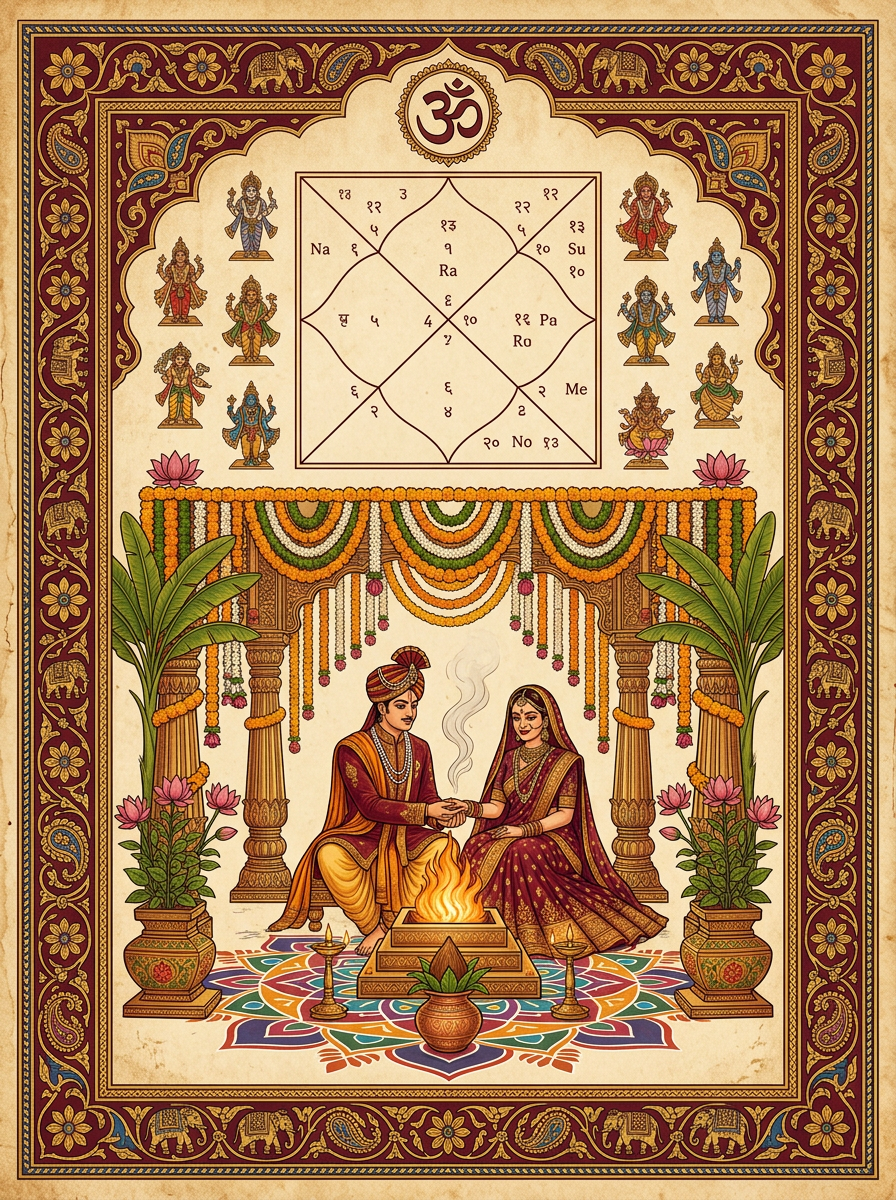
In my consultations at Daivagya, I often meet couples who love each other deeply yet struggle with sudden emotional storms that neither partner fully understands. One spouse might withdraw into silence over a minor comment, while the other feels perpetually walking on eggshells. When we look beneath the surface of the birth chart, we very frequently find an afflicted Moon in the Kundli.
In Vedic astrology, the Moon is not merely a celestial body; it is the Manakaraka—the significator of the mind, emotional perception, and inner contentment. While the Sun represents your soul and outward identity, the Moon governs how you feel, how you process experiences, and how you respond to your partner on an ordinary Tuesday evening. When the Moon is troubled by harsh planetary influences, marital peace often becomes fragile.
Understanding the condition of your Moon is one of the most empowering steps you can take toward domestic harmony. It shifts the narrative from "Why is my partner doing this to me?" or "Why am I so reactive?" to a grounded awareness of planetary psychology.
What does the Moon represent in Vedic marriage astrology?
The classic texts state simply: Chandrama Manaso Jatah—the Moon was born from the mind of the cosmic being. In a marriage chart, the Moon governs your emotional baseline, your sense of security, and your capacity to nurture and be nurtured. It indicates whether you view life through a lens of optimism and calm or through apprehension and mistrust.
While Venus dictates romance and attraction, and Jupiter governs commitment and wisdom, the Moon dictates whether you can actually relax in your partner's presence. A healthy, radiant Moon gives emotional resilience, patience, empathy, and the ability to let go of petty grievances. You can check your Moon sign and house placement right now using our free kundli tool.
When the Moon is healthy, you feel inherently safe within yourself. When the Moon is compromised, you unconsciously expect your spouse to carry the burden of your internal stability. When they inevitably fail to satisfy every unspoken emotional expectation, friction begins.
How does an afflicted Moon in the Kundli manifest in daily married life?
An afflicted Moon rarely creates open ideological warfare; instead, it generates an undercurrent of emotional unpredictability. In my practice, I find that people with a challenged Moon often experience their feelings with immense intensity, making routine relationship adjustments feel like personal rejections.
Here are the classic ways an afflicted Moon in the Kundli reflects in day-to-day married life:
- Unpredictable mood swings: Experiencing sharp shifts from warmth and affection to cold withdrawal or irritability without an obvious external trigger.
- Deep-rooted insecurity: Seeking constant verbal reassurance from the spouse, yet struggling to fully believe or absorb that reassurance when it is given.
- Overthinking and scenario creation: Replaying small conversations repeatedly and constructing worst-case assumptions about the spouse’s intentions or feelings.
- Hypersensitivity to criticism: Perceiving neutral observations or gentle feedback as harsh personal attacks.
- Emotional exhaustion: Feeling mentally drained by ordinary domestic responsibilities and miscommunications.
These patterns do not stem from malice or a lack of love. They are the natural consequence of a mind that lacks an internal anchor, causing it to react intensely to the shifting tides of daily circumstances.
Which planetary combinations create an afflicted or weak Moon?
In Jyotish, the Moon is the most sensitive and impressionable of all the Grahas. Because it moves through the zodiac in just twenty-seven days, it absorbs the energy of every planet it touches or receives an aspect from.
   [ Saturn ] ----(Vish Yoga)----> [ MOON ] <----(Grahan Yoga)---- [ Rahu/Ketu ]
                                      |
                                      +----> In 6th, 8th, or 12th House
                                      |
                                      +----> Debilitated in Scorpio (Vrishchika)
                                      |
                                      +----> Kemadruma Yoga (Isolated)
The Moon becomes afflicted or compromised through several well-defined classical configurations:
1. Conjunction or aspect from Saturn (Punarphoo or Vish Yoga)
When Saturn influences the Moon, it brings melancholy, emotional dryness, chronic worry, and a tendency to expect disappointment. In a marriage, this combination often makes the native feel unloved or burdened, even when the spouse is supportive. There is a persistent fear of neglect or emotional abandonment.
2. Conjunction with Rahu or Ketu (Grahan Yoga)
Rahu amplifies the Moon’s fears, creating illusion, paranoia, obsessive overthinking, and extreme mood volatility. With Ketu, the Moon experiences sudden emotional numbness, detachment, and an erratic desire to pull away from family interactions without warning.
3. Conjunction or aspect from Mars (Chandra-Mangal affliction)
While a well-placed Mars-Moon combination creates financial drive (Chandra-Mangala Yoga), an adverse aspect or tight conjunction in difficult houses produces emotional impulsiveness, quick temper, defensiveness, and sharp verbal reactions during domestic disagreements.
4. Debilitation in Scorpio (Neecha Chandra)
The Moon reaches its lowest vitality in Scorpio, particularly in the deep degrees of Jyeshtha nakshatra. Here, the mind holds onto grievances, suspects hidden motives, and experiences intense emotional turbulence that can strain day-to-day marital trust.
5. Placement in Trika Houses (6th, 8th, or 12th)
When the Moon resides in the 6th house (disputes and anxiety), the 8th house (sudden transformations and psychological distress), or the 12th house (isolation, overactive subconscious, and sleep disturbances), emotional equilibrium requires conscious, lifelong cultivation.
6. Kemadruma Yoga (The Isolated Moon)
If there are no planets (excluding the Sun, Rahu, and Ketu) in the second and twelfth houses from the Moon, Kemadruma Yoga is formed. This placement creates an innate sense of psychological loneliness, leading the individual to feel misunderstood by their spouse regardless of how much attention they receive.
Why does an afflicted Moon trigger insecurity and overthinking with your spouse?
The fundamental challenge of a distressed Moon is an unstable sense of inner validation. When your Manas feels vulnerable, your mind constantly scans your environment for threats to your emotional safety. In a marriage, your spouse is your closest mirror, so your subconscious mind projects all of its unresolved fears directly onto them.
If your spouse arrives home tired and speaks in a flat tone, a balanced Moon recognizes: "They had a stressful day at work." An afflicted Moon, however, immediately worries: "They are losing interest in me; I must have done something wrong."
This dynamic is what we often describe as Moon and emotional insecurity in relationships. The insecurity does not originate in the spouse's behavior; it originates in the lunar filter through which the native interprets reality. Over time, this chronic misinterpretation creates real tension, leading to avoidable misunderstandings and unnecessary emotional distance.
How do specific afflictions shape emotional behavior?
To help you identify how different planetary combinations operate, the following table summarizes the primary lunar afflictions and their common behavioral reflections in a marriage:
| Lunar Combination | Astrological Name / Condition | Primary Emotional Manifestation | Impact on Married Life |
|---|---|---|---|
| Moon + Saturn | Vish Yoga / Punarphoo | Chronic pessimism, emotional coldness, suppressed grief | Partner feels emotionally shut out; native feels unappreciated |
| Moon + Rahu | Grahan Yoga (Rahu) | Paranoia, irrational suspicion, hyper-reactivity | Imagined infidelities or slights; frequent dramatic outbursts |
| Moon + Ketu | Grahan Yoga (Ketu) | Sudden detachment, apathy, mood fluctuations | Partner feels abandoned; native struggles to stay engaged |
| Moon + Mars (Difficult) | Adverse Chandra-Mangal | Impatience, defensive anger, reactive speech | Minor discussions escalate quickly into heated arguments |
| Moon in 8th House | Ashtama Chandra | Deep psychological anxiety, fear of loss, secrecy | Difficulty opening up fully; emotional turbulence under stress |
| Moon Isolated | Kemadruma Yoga | Feeling perpetually lonely, misunderstood, or unanchored | Placing excessive emotional demands on the spouse |
Is a weak Moon the same as an afflicted Moon?
In my practice, I frequently clarify the distinction between a weak Moon in birth chart and an afflicted one, as they require different assessments and remedies.
+-----------------------------------+-----------------------------------+
|             WEAK MOON             |          AFFLICTED MOON           |
+-----------------------------------+-----------------------------------+
| Low Paksha Bala (Amavasya birth)  | Conjoined/aspected by malefics    |
| Low Digbala (near 10th house)     | Trapped in Paap Kartari Yoga      |
| Placed in an inimical sign        | Placed in 6th, 8th, or 12th house |
| Manifestation: Timidity, shyness, | Manifestation: Turbulence, anger, |
| low energy, passive compliance    | suspicion, intense mood swings    |
+-----------------------------------+-----------------------------------+
A weak Moon simply lacks vitality (Bala). This often happens when someone is born near the New Moon (Amavasya), where the lunar disc possesses minimal light, or when the Moon has low positional strength (Sthana Bala). A person with a weak Moon may be shy, easily overwhelmed, low on confidence, or emotionally passive in marriage, but they are rarely aggressive or suspicious.
An afflicted Moon, on the other hand, is actively disturbed by malefic energies. Such a Moon can have high brightness (Paksha Bala) but still produce intense friction because its energy is distorted by Rahu, Saturn, or Mars. Understanding whether your Moon is weak, afflicted, or both ensures that you choose the right remedial approach rather than applying generic solutions.
What role does Paksha Bala and the Navamsa chart play in Moon analysis?
An astrologer must never judge the Moon solely from the basic birth chart (Lagna Kundli). Two critical factors frequently alter the final outcome: Paksha Bala and the Navamsa (D9) chart.
The Power of Paksha Bala (Lunar Phase)
Paksha Bala is the single most important source of strength for the Moon. A bright, waxing Moon (Shukla Paksha Ekadashi to Krishna Paksha Panchami) possesses inherent beneficence. Even if a bright Moon suffers an affliction from Saturn or Mars, its internal luminosity provides the native with the resilience to bounce back from emotional dips.
Conversely, a dark, waning Moon (Krishna Paksha Paksha Chathurdashi or Amavasya) is considered an inherent malefic in classical calculation. When a dark Moon is afflicted, the resulting emotional volatility is significantly more pronounced.
The Navamsa (D9) Dignity
The Navamsa chart reveals the inner reality of your marriage and the true, matured state of your planets. If your Moon is debilitated or afflicted in the birth chart but attains its own sign (Cancer), exaltation (Taurus), or sits with a benefic like Jupiter in the Navamsa, the emotional turbulence will soften considerably after marriage.
However, if the Moon appears strong in the birth chart but falls into an afflicted state or a malefic Navamsa, the native may appear calm socially while experiencing deep emotional dissatisfaction within the private sphere of the home.
When do Moon afflictions become most active in a marriage?
Planetary afflictions do not operate at maximum intensity every single day. They activate during specific planetary time periods (Dashas) and transits (Gochara).
During the Mahadasha or Antardasha of the Moon, or the dasha of the malefic planet afflicting the Moon (such as Rahu or Saturn), the native's emotional equilibrium undergoes a serious test. A Saturn-Moon or Rahu-Moon period is famous in Vedic literature for creating domestic unease, unprovoked anxiety, and a feeling that one's partner has become distant.
Similarly, lunar transits play a powerful role:
- Sade Sati: When transiting Saturn crosses the 12th, 1st, and 2nd houses from your natal Moon, emotional structures are thoroughly audited.
- Ashtama Shani: Saturn transiting the 8th house from your natal Moon often triggers deep internal vulnerability.
- Monthly Lunar Transits: Every month, when the transiting Moon crosses your natal 8th house (Chandrashtama), you may notice two and a half days of heightened irritability or low emotional tolerance.
Recognizing these timing cycles allows couples to practice patience, avoiding major confrontations during periods when mental clarity is naturally compromised.
Can the spouse's Kundli balance your afflicted Moon?
This is one of the most beautiful dimensions of Vedic chart matching (Kundli Milan). An afflicted Moon in one partner’s chart does not condemn the marriage to perpetual unhappiness if the other partner’s chart provides emotional grounding.
When I evaluate compatibility, I look for planetary synastry that acts as a natural stabilizer:
- Jupiter's Aspect: If your spouse’s natal Jupiter casts a trine or opposition aspect onto your afflicted natal Moon, their natural presence will act as a soothing balm to your anxiety.
- Strong Lagna Lord: A partner with an exceptionally stable ascendant and strong Sun provides the psychological anchor that an afflicted Moon native desperately needs.
- Complementary Moon Elements: If a watery, afflicted Moon is paired with a steady, well-placed Earth Moon (such as Moon in Taurus or Capricorn with benefic aspects), the earth element absorbs and calms the water element's turbulence.
When two people understand their planetary mechanics, they stop taking emotional fluctuations personally. The grounded partner learns when to offer quiet reassurance, and the sensitive partner learns to acknowledge their internal weather without blaming their spouse.
What practical Vedic remedies help soothe an afflicted Moon?
Vedic astrology never leaves us stranded in diagnosis; it provides practical, time-tested remedies (Upayas) to strengthen the lunar energy and restore mental tranquility. When addressing an afflicted Moon in the Kundli, the objective is to calm the Manas, cool excess internal heat, and build emotional resilience.
       +-------------------------------------------------------+
       |             TRADITIONAL LUNAR REMEDIES                |
       +-------------------------------------------------------+
                                  |
         +------------------------+------------------------+
         |                        |                        |
   [ SPIRITUAL ]             [ PHYSICAL ]             [ RELATIONAL ]
   • Shiva Upasana           • Silver glass water     • Honoring mother
   • Chandramouli mantra     • White clothing         • Calming nighttime
   • Somavara fasting        • Natural Pearl*         • Honest dialogue
                               (*if prescribed)
1. Devotion to Lord Shiva
Lord Shiva wears the crescent Moon (Chandra) upon His matted locks, symbolizing complete mastery and calming of the mind. Chanting the Maha Mrityunjaya Mantra or the simple Om Namah Shivaya daily—especially on Mondays—subdues the anxiety caused by Rahu, Saturn, or Ketu afflictions. Offering clean water or milk on a Shivling is a classical method to bring peace to a troubled Moon.
2. Honoring and Serving the Mother (Matru Seva)
In Vedic philosophy, the Moon directly represents the mother and maternal figures. Strained relationships with one's mother or maternal elders further damages lunar energy. Treating your mother with respect, seeking her blessings, and supporting her well-being cleanses deep karmic blockages associated with Chandra Dosha in marriage.
3. Mindful Use of Water and Silver
The Moon rules fluids and the metal silver. Drinking water from a pure silver cup helps balance lunar vibrations. Avoid wasting water in your household, as the careless waste of clean water is believed in classical Jyotish to deplete lunar strength.
4. Intentional Evening Routine and Meditation
Because the Moon governs sleep and the subconscious, people with lunar afflictions must avoid stimulating discussions, heated debates, or stressful media late at night. Establishing a peaceful bedtime routine directly protects the emotional tone of the marriage the following morning.
5. Gemstone Guidance: A Word of Caution
Wearing a natural Pearl (Moti) or Moonstone is a well-known remedy, but it is not universally suitable. If your Moon is a functional malefic for your ascendant (for instance, ruling the 6th, 8th, or 12th house in certain Lagnas), or if it is heavily afflicted by Rahu, wearing a pearl can sometimes amplify the anxiety rather than soothe it. Never wear a gemstone without a precise evaluation of your chart.
If emotional friction or unspoken anxiety is affecting your relationship, you can book a consultation for a detailed, confidential analysis of both birth charts.
Frequently asked questions
Can an afflicted Moon cause serious long-term unhappiness in marriage?
An afflicted Moon creates emotional turbulence and miscommunication, but it does not dictate the fate of a marriage on its own. With self-awareness, conscious communication, supportive planetary placements in the Navamsa chart, and traditional remedies, couples can build a stable, loving, and deeply fulfilling life together.
What is the difference between Chandra Dosha and Manglik Dosha?
Manglik Dosha relates to Mars and primarily affects temperament, assertiveness, and physical conflict in relationships. Chandra Dosha refers to afflictions to the Moon, which govern internal perception, emotional security, overthinking, and mood fluctuations rather than outward aggression.
Does drinking water from a silver vessel really help an afflicted Moon?
In Vedic tradition and Ayurveda, silver is a cooling metal ruled by the Moon and Venus. Using a silver vessel is believed to balance internal heat (Pitta), calm an overactive nervous system, and psychologically anchor the native’s intention toward emotional tranquility.
How do I know if my mood swings are astrological or psychological?
Astrology and psychology are complementary lenses. Astrological placements describe your innate tendencies and timing cycles, while psychology describes your behavioral patterns. If emotional distress is affecting your daily functioning, practical emotional self-care and professional guidance should always go hand in hand with astrological remedies.
Is an afflicted Moon cancelled if Jupiter aspects it?
Yes, a benefic aspect from Jupiter on an afflicted Moon creates Gaja Kesari Yoga or provides Subha Drishti. Jupiter’s wisdom and expansive grace significantly mitigate the harsh effects of Saturn, Rahu, or debility, granting the native resilience and emotional maturity over time.
Continue reading
Diwali Week 2026 Day by Day: Dhanteras to Bhai Dooj Puja Guide for Couples
Discover how couples can observe Diwali week 2026 together. Day-by-day rituals, auspicious muhurats, and Vedic astrology remedies for lasting marital harmony.
Malefic Saturn in a Marriage Chart: Delays, Coldness and How to Ease Them
Understand how a malefic Saturn influences marriage timing and emotional warmth in your Kundli, along with practical Vedic remedies to ease its heaviness.
Debilitated Venus in Virgo: How It Affects Love, Attraction and Married Life
Discover how debilitated Venus in Virgo impacts love, romantic attraction, and marriage, along with cancellation rules, nakshatra effects, and practical remedies.
How Malefic Venus Can Cause a Bad Relationship and Married Life: Signs and Remedies
Discover how an afflicted or malefic Venus impacts marital harmony, recognizable behavioral signs in relationships, and practical Vedic remedies to restore warmth.
Want your specific situation analysed?
Book a private Marriage & Relationship Consultation with Dr. Rahul Singh — your charts read in detail, with a clear, confidential opinion you can act on.
Limited offer · was ₹15,000 · One-time payment · 60-minute personal consultation