11 August 2026 · Daivagya
Putrakaraka, Matrikaraka and the Family Karakas Explained
The Jaimini karakas describe your mother, father, children and spouse. Here is what Matrikaraka, Pitrikaraka and Putrakaraka reveal about family life.
Quick answer
In Vedic astrology, family karakas are planetary significators that define specific domestic relationships based on their longitudinal degrees. The Putrakaraka represents children and intelligence, while the Matrikaraka and Pitrikaraka signify the mother and father respectively. Analyzing these variable Jaimini indicators alongside traditional houses provides deep insight into the health, karma, and overall quality of one’s familial bonds and ancestral legacy.
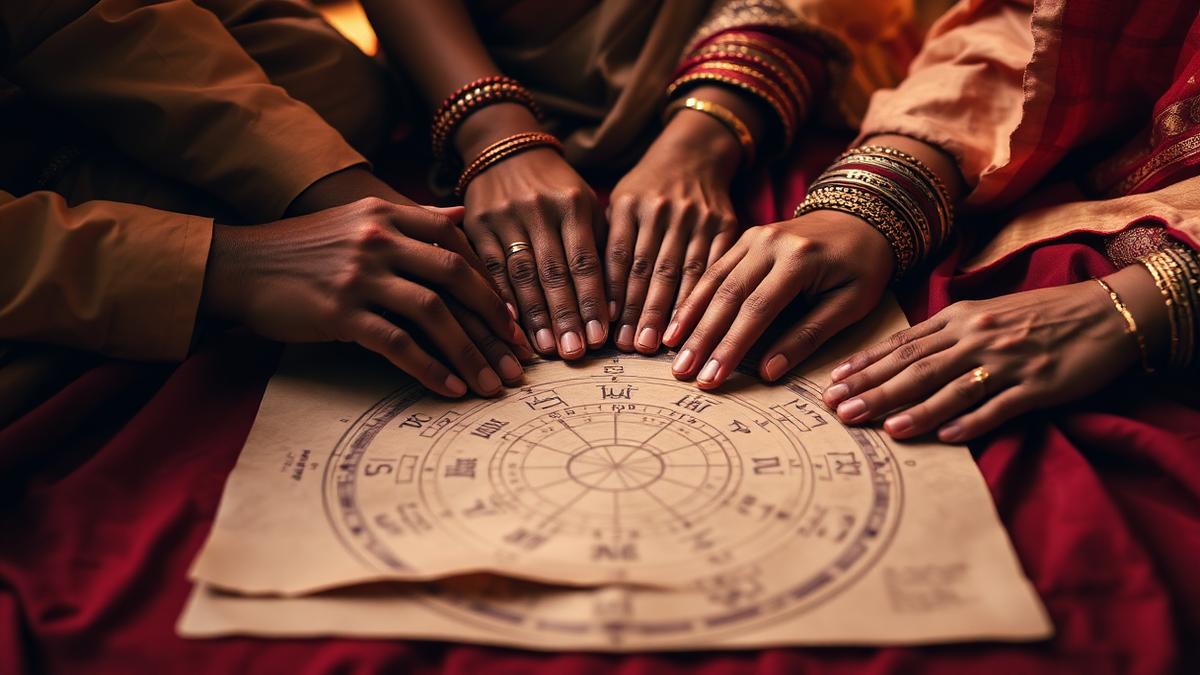
Family is where astrology becomes real. Not the abstract talk of yogas and dashas, but the everyday questions — will my mother''s health hold, will my children settle well, why is there tension with my father. In Jaimini astrology, these questions have their own set of significators: the chara karakas.
I use them constantly, because they often explain family patterns that the houses alone cannot.
What are the Jaimini karakas?
The planets are ranked by the degrees they have travelled in their signs. The highest becomes Atmakaraka, and the rest follow in order, each taking charge of one relationship:
- Atmakaraka — the soul, the self.
- Amatyakaraka — career, advisers, the mind at work.
- Bhratrikaraka — siblings, and often gurus.
- Matrikaraka — mother, education, emotional shelter.
- Pitrikaraka — father, and in some readings children.
- Putrakaraka — children, creativity, intelligence.
- Gnatikaraka — obstacles, cousins, disputes, illness.
- Darakaraka — spouse and partnership.
Unlike the fixed karakas (Sun always signifies father, Moon always mother), these change from chart to chart. That is what makes them personal.
What does Putrakaraka say about children?
Putrakaraka is the first thing I check when a couple asks about children — before the 5th house, and certainly before anyone panics.
A Putrakaraka that is strong, well-placed and free from heavy affliction usually indicates children arriving without unusual struggle. Afflicted by Saturn or Ketu, I read it more carefully: delay, medical support, or a longer wait. I say this gently, because these are tender matters and no chart is a medical report.
I always cross-check Putrakaraka with the 5th house and the Saptamsha (D7) chart. One indication alone is never enough for a statement this serious.
And Matrikaraka and Pitrikaraka?
Matrikaraka describes your mother''s role in your life — her health, her influence, and how much emotional shelter you received. When it sits with benefics, the bond is nourishing. Under Saturn''s pressure, the relationship often carries duty and distance together.
Pitrikaraka works the same way for the father: authority, support, inheritance, and sometimes the absence of these. In many charts I read, a difficult Pitrikaraka does not mean a bad father — it means the person had to become their own authority early.
Do the karakas matter in kundli matching?
They do, and this is where South Indian astrologers often go deeper than a plain guna score. Darakaraka describes the spouse''s nature. Putrakaraka speaks about children. Gnatikaraka shows where conflict will come from.
In kundli matching, when the guna points look average but the karakas of both charts sit comfortably together, I have seen marriages work beautifully. The reverse is also true. Numbers alone were never meant to be the whole judgement.
To have your own karakas mapped out — for marriage, children and family — start with your chart on the kundli page and bring it to a confidential consultation through the booking page.
Continue reading
Combust Planets: When a Planet Loses Its Voice
Combust planets sit too close to the Sun and struggle to express themselves. Learn what combustion means for marriage and life outcomes.
Retrograde Planets in a Birth Chart and What They Change
Retrograde planets in a birth chart do not mean weakness. Learn what they actually change in timing, temperament and marriage matters.
Property, Loans and Joint Finances Through the 4th House
How the 4th house reveals property, loans and joint financial harmony in marriage, and when to plan big purchases with confidence.
Will Marriage Improve Your Luck? What the Chart Suggests
Does marriage really improve luck? Learn how the 7th house, dasha timing and chart compatibility actually influence fortune after marriage.
New here? Start with the full guide to Kundli Matching: The Complete Guide, or try the free kundli tool.
Want your specific situation analysed?
Book a private Marriage & Relationship Consultation with Dr. Rahul Singh — your charts read in detail, with a clear, confidential opinion you can act on.
Limited offer · was ₹7,500 · 60-minute consultation + detailed written analysis